

You know that voice. It doesn’t shout. It whispers. It’s the quiet, insistent murmur in the back of your mind when you’re about to raise your hand in a meeting, send that risky email, or finally launch that side project you’ve been nursing for years.
“You’re not ready.”
“They’ll figure out you don’t belong here.”
“Who do you think you are?”
This isn’t laziness. This isn’t a lack of talent or opportunity. This is something far more corrosive and common: self-doubt. And if we’re not careful, it doesn’t just slow us down—it methodically, silently, assassinates our ambition.
Ambition is the rocket fuel. It’s the vision of a better job, a thriving business, a published novel, a healthier body, a more adventurous life. Self-doubt is the hidden weight strapped to the fuselage. It’s the “what if I fail?” that echoes louder than the “what if I fly?”
The tragedy isn’t that self-doubt exists. Everyone feels it, from the intern to the Oscar-winner. The tragedy is that we so often mistake it for truth, for a rational assessment of our limits. We let this internal critic, who only has our most ancient fears for reference, become the CEO of our decisions.
But what if we could demote that critic? What if we could understand where that whisper comes from, recognize its tricks, and build a toolkit to talk back? This is about learning to beat the silent killer of ambition, not with arrogant bluster, but with quiet, steady confidence.
Part 1: The Anatomy of a Silent Killer

First, let’s be clear: a little self-doubt is healthy. It’s the system check that prevents pure recklessness. But when it becomes the default setting, it transitions from a useful alarm into a constant, debilitating soundtrack.
Why does it feel so powerful?
- It Masquerades as Wisdom: Self-doubt often dresses up in the clothes of “being realistic.” It convinces us that playing small is smart, that avoiding risk is prudent. Ambition feels childish; doubt feels mature. This is its greatest trick.
- It Feeds on Past Data (But Curates It Poorly): Your brain is a pattern-recognition machine. If you failed at a speech in 8th grade, felt rejected when you asked for a date in high school, or botched a project at your first job, your brain files that under “Evidence of Inadequacy.” It conveniently forgets the thousands of successes—the conversations that went well, the tasks you nailed, the problems you solved. Self-doubt has a terrible, biased memory.
- It’s Socially Reinforced: From a young age, we’re often (directly or indirectly) taught not to brag, not to stand out too much, to wait our turn. While meant to encourage humility, it can breed a culture where voicing our ambitions feels arrogant, and thus, doubting them feels polite.
- It Loves Comparison (But Only Upward): In the age of social media, we don’t compare our behind-the-scenes to everyone else’s behind-the-scenes. We compare our messy first draft to someone else’s polished, highlighted, and filtered final cut. Self-doubt seizes on this: “See? They have it all figured out. You don’t. Stay in your lane.”
The cost of listening is immense. It shows up as procrastination (I’ll start when I’m perfectly ready, which is never). As self-sabotage (missing a crucial deadline, so you have an “excuse” for failure). As perfectionism, which is just self-doubt in a fancy suit—the belief that if it isn’t flawless, it’s worthless. It’s the gap between the life you’re living and the life you feel pulsing inside you, waiting to get out.
Part 2: Where the Heck Does This Voice Even Come From?
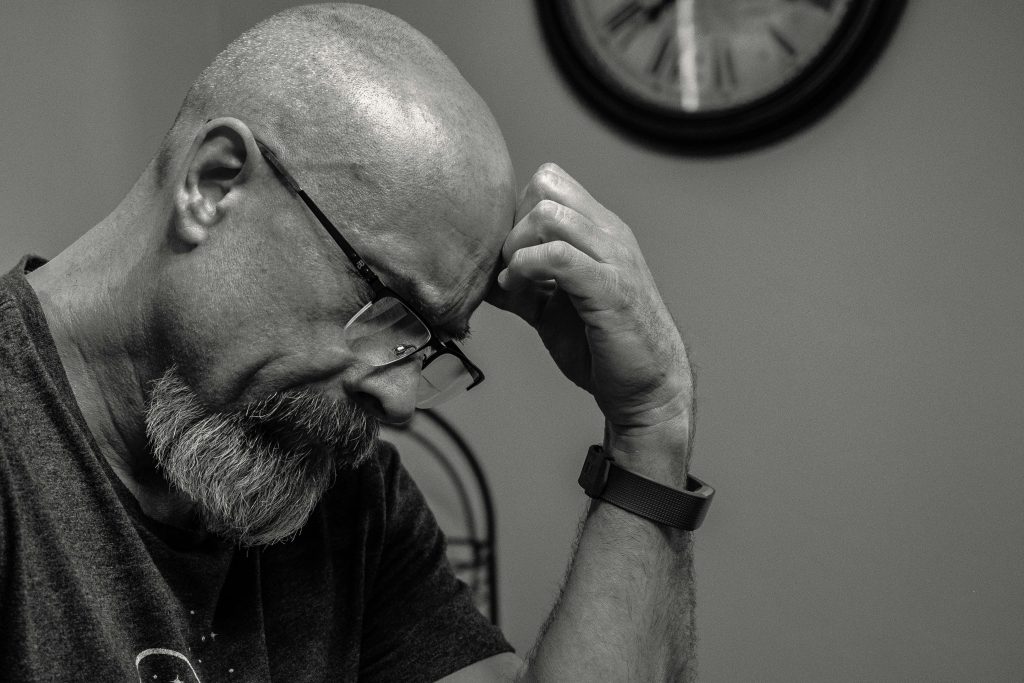
To fight an enemy, you have to know its origin. That whispering critic isn’t you. It’s a construct, built from pieces of your past.
- The Echo of Old Criticism: A harsh comment from a parent, a dismissive teacher, a bullying peer. These moments can fossilize in our psyche, and long after those people are gone, we keep their recording on loop, playing it as our own original thought.
- The “Imposter” Factory: Every new step up, college, a promotion, starting a business—plunges you into a new environment where you’re a beginner again. Your brain, craving the comfort of competence, screams “FRAUD!” It mistakes the normal learning curve for proof that you’re a pretender.
- Fear of the Spotlight: Ambition puts you in the light. With the light comes visibility, and with visibility comes the potential for judgment, ridicule, or failure. For many, the whisper of self-doubt feels safer than the glare of the spotlight. It’s a retreat to the shadows where it’s comfortable, if unfulfilling.
- The Overprotective (But Clumsy) Guardian: At its core, this voice is a primitive part of your brain trying to protect you. Its job is to keep you safe from physical threat. It interprets social risk, rejection, embarrassment, failure, with the same panic as a saber-toothed tiger. It’s yelling, “Don’t raise your hand! The tribe might laugh at you and cast you out!” It hasn’t updated its software for the modern world.
Recognizing that this voice is an artifact, not an oracle, is the first, crucial step to breaking its power.
Part 3: The Toolbox: How to Talk Back and Take Back Control

Beating self-doubt isn’t about achieving a state of permanent, unshakable confidence. That’s a myth. It’s about changing the relationship with the voice. It’s about turning down its volume and turning up the volume on a wiser, kinder, more evidence-based narrator. Here’s how.
Tool 1: Name It and Separate It.
Give your self-doubt a silly name. “Oh, here’s ‘Nervous Nigel’ again, predicting doom.” Or “There’s ‘Perfectionist Patty,’ insisting I start over from scratch.” This does something powerful: it externalizes the voice. It’s not you; it’s just a character that shows up. You can acknowledge its presence without letting it drive the car.
Tool 2: Become a Detective, Not a Defendant.
When the whisper says, “You’re going to fail at this presentation,” don’t just accept it. Cross-examine it. Ask:
- “What is the actual, concrete evidence for this?”
- “Have I done anything remotely like this before successfully?”
- “What’s the absolute worst that could happen? And if it did, could I survive it?” (Spoiler: you almost always could.)
- “Am I confusing feeling nervous with being incompetent?”
Collect real data from your life. Make a “Mastery Log” of things you’ve learned, problems you’ve solved, challenges you’ve overcome. When doubt speaks, consult your log. Fight feelings with facts.
Tool 3: Embrace the “Good Enough” Launch.
Perfectionism is ambition’s jailer. The antidote is the concept of Minimum Viable Action. Don’t wait to write the perfect novel. Commit to writing one mediocre paragraph today. Don’t wait to launch the perfect business with the perfect website. Sell one product to one friend. Action is the kryptonite to doubt. Every small, completed action builds a brick of evidence against the voice that says “you can’t.”
Tool 4: Reframe Failure as Data.
Our culture often treats failure as a moral stain, a final verdict. For the ambitious, it must become feedback. Thomas Edison didn’t say he failed 10,000 times to make a lightbulb. He said he found 10,000 ways that didn’t work. When you try and stumble, the only real failure is learning nothing from it. Ask: “What did this teach me? What will I adjust next time?” This turns a source of fear into a source of power.
Tool 5: Curate Your Inputs.
You are the average of the five voices you listen to most. If you’re consuming media that makes you feel inadequate, following social accounts that spark comparison, or spending time with people who are cynical about dreams… you are feeding your self-doubt a gourmet meal. Be ruthless. Follow people who are on the path you admire. Read stories of resilience. Find a “hype squad” friend or a mentor who sees your potential and will reflect it back to you when you forget.
Tool 6: Practice Radical Self-Compassion.
You would never speak to a terrified friend the way your self-doubt speaks to you. You’d say, “It’s okay to be scared. This is new. I believe in you. Just take one small step.” You must learn to speak to yourself with that same kindness. When the fear rises, put a hand on your heart and literally say, “This is really hard right now. It’s normal to feel scared. I’m here for myself.” This isn’t woo-woo; it’s neuroscience. It calms the primal threat response and allows the rational, planning part of your brain to come back online.
Tool 7: Focus on the Process, Not the Phantom.
Ambition often points to a terrifying, distant peak: “Bestselling Author,” “CEO,” “Award-Winning Artist.” The gap between here and there is where doubt thrives. Stop staring at the peak. Fall in love with the climb—the daily process. Find joy in writing 300 words, in studying your craft, in making one solid business connection. The person who becomes a CEO is the one who learns to love the grind of solving problems and leading teams. The process is the thing you can control. Trust that it will carry you to places your doubting mind can’t yet envision.
The Antidote is Action, Not Certainty

The goal is not to slay the dragon of self-doubt forever. It will likely always be there, in some form. The goal is to build a self so strong in its habits, so grounded in its own evidence, and so compassionate in its outlook, that the dragon’s whisper becomes background noise—a distant sound, not a commanding voice.
The most ambitious people in history weren’t doubt-free. They were doubt-resistant. They felt the fear, heard the whisper, and took the step anyway. They understood that courage isn’t the absence of fear, but the judgment that something else is more important than that fear.
Your ambition—that quiet vision of a more expansive, expressive, impactful life—is more important than your fear.
So the next time the whisper starts, don’t argue with its philosophy. Simply thank it for its (misguided) concern. And then, deliberately and gently, turn your attention away from the internal monologue and toward the very next, tiny, physical action in front of you.
Pick up the pen.
Open the blank document.
Send the email.
Say the idea.
Take the first step.
The whisper thrives in the stillness of contemplation. It loses its power in the motion of action. Step by step, action by action, you won’t just beat self-doubt. You’ll build a life so loud with purpose and progress that you’ll barely be able to hear it anymore. And that is the sweetest silence of all.